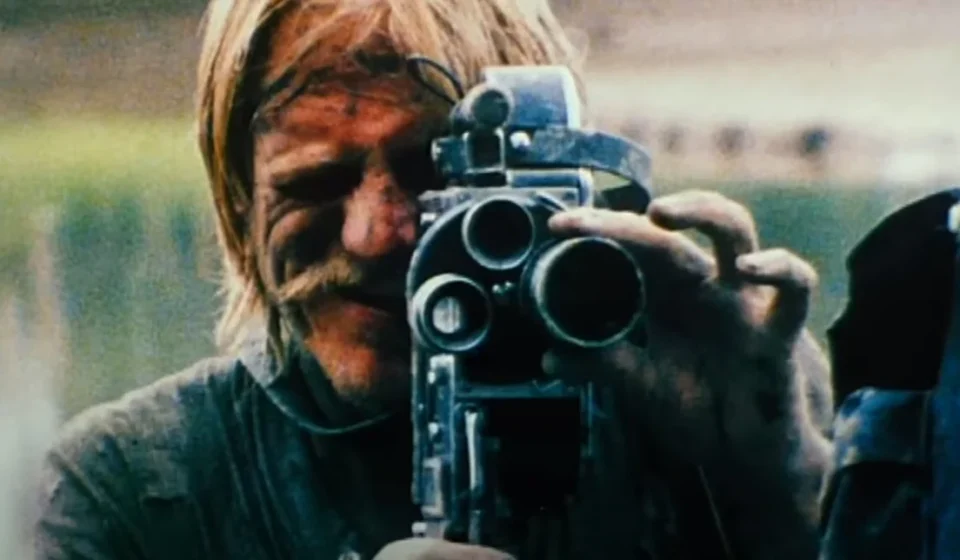
The Resurrection of the Infamous: Inside the Definitive 4K Restoration of ‘Cannibal Holocaust’

Few films in the history of cinema have managed to achieve the legendary, albeit radioactive, status of Ruggero Deodato’s 1980 masterpiece, Cannibal Holocaust. A work that blurred the lines between high-concept satire and genuine transgression, it stands as a polarizing monolith of the horror genre. Today, over four decades after its initial release, the film is undergoing a meticulous, multi-year, state-of-the-art restoration process spearheaded by Grindhouse Releasing. This effort promises to preserve the film’s chilling technical innovations while finally presenting it in a format that honors its original, complex visual design.
The Genesis of Found Footage
In 1980, Ruggero Deodato unleashed a film upon the world that would fundamentally alter the language of horror. Cannibal Holocaust follows an anthropologist’s harrowing trek into the Amazon rainforest, where he seeks to recover the lost footage of a documentary crew that vanished while searching for indigenous tribes. Upon recovering their reels, he discovers a narrative of exploitation, betrayal, and inevitable violence.
Long before the massive commercial success of The Blair Witch Project introduced found-footage storytelling to the global mainstream, Cannibal Holocaust had already perfected the technique. The film utilizes a jarring, handheld aesthetic that creates an unsettling sense of immediacy. Its technical skill is undeniable; the film’s ability to force the viewer into a state of total suspension of disbelief is a testament to Deodato’s vision. It remains, for many, the pinnacle of visceral horror—a movie that does not merely tell a story, but demands that the audience participate in its grisly, unflinching reality.
A Legacy of Moral Complexity
The notoriety of Cannibal Holocaust is, unfortunately, inseparable from its ethical failings. The film became a lightning rod for controversy upon its debut, primarily due to its unflinching depiction of animal cruelty. While Deodato and his supporters have historically argued that the animal deaths served a "conceptual purpose"—conditioning the audience to perceive the later human horrors as undeniably real—the practice remains morally indefensible to many critics and viewers.
This duality defines the film’s legacy. It is a work that is as historically significant as it is difficult to champion. For the serious horror enthusiast, however, Cannibal Holocaust is a mandatory, if agonizing, watch. It is a piece of cinema that asks the audience to grapple with the ethics of the gaze, the morality of the filmmaker, and the thin, permeable barrier between art and atrocity.

The Grindhouse Releasing Restoration Project
To navigate the film’s controversial history while preserving its cinematic DNA, Grindhouse Releasing has dedicated years to a comprehensive 4K restoration. The process was supervised by Bob Murawski, an Academy Award-winning editor known for his frequent collaborations with director Sam Raimi and his work on The Hurt Locker.
Murawski’s approach was driven by a commitment to technical perfection. "This will be the definitive release of Cannibal Holocaust from here on in," Murawski stated. "Not only are our scans superior—they were done on the finest equipment by L’Immagine Ritrovata lab in Bologna, whereas the scans for all the other releases were done on inferior equipment in a facility in Rome—but our release will also contain three versions of the film."
The logistical hurdles were immense. Murawski and his team had to navigate bureaucratic resistance from producers reluctant to ship delicate, original film elements across borders. "The first step was persuading the producers to let us transfer the elements from the lab in Rome to our preferred restoration lab in Bologna," Murawski noted. "They are very resistant to shipping original elements, as you might imagine. But I knew it was imperative in order to achieve the best results."
A Triple-Layered Experience
The forthcoming release is not a mere touch-up; it is a structural re-evaluation of the film. The package includes three distinct versions:
- The Original Theatrical Cut: The standard, uncensored experience that audiences have known for years, featuring the "Green Inferno" documentary segments sourced from the 1.85:1 35mm blow-up of the original 16mm footage.
- The Special Edition: A landmark restoration that presents the "Green Inferno" footage scanned from the original 16mm camera negative in its native 1.37:1 aspect ratio.
- The Surreal Cut: A third, mysterious version, which Murawski describes as "particularly surreal," featuring footage discovered during the exhaustive search of the archives.
The decision to restore the Special Edition with its original 1.37:1 framing was influenced by Murawski’s previous work on Orson Welles’ The Other Side of the Wind. By contrasting the 35mm narrative footage (at 1.85) with the 16mm documentary footage (at 1.37), the team has managed to enhance the film’s "found footage" conceit. "It makes the contrast between the search party 35mm narrative and the 16mm film-within-the-film even more striking," Murawski explained. "And it allows the audience to see about 50 percent more image area in the documentary footage."

Chronology of the Hunt
The restoration process began in May 2021, evolving into a years-long "jigsaw puzzle." Murawski’s team had to hunt for audio files for alternate takes, meticulously ordering "nebulously-annotated" items from inventory lists to find the necessary components. A major win for the team was the recovery of the longer, original version of the "Last Road to Hell" sequence, which had been missing from the conformed negative for decades.
This painstaking work involved:
- Color Grading: Andrew Drapkin handled the 4K assembly and color grading, a delicate task given the varying film formats.
- Visual Restoration: Marcus Johnson oversaw the cleaning of the 35mm footage to remove decades of decay.
- Audio Restoration: Sound supervisor Jussi Tegelman undertook the monumental task of restoring the film’s audio landscape.
Implications for Modern Cinema
The restoration of Cannibal Holocaust serves as a poignant reminder of the evolving reception of "exploitation" cinema. Murawski recounts the early days of his efforts to screen the film, noting that in the 1990s, theater bookers would refuse to return his calls once they realized what the film was. "When The Blair Witch Project became a huge hit in 1999, we tried again… theater bookers were now familiar with the title and interested in it, but once they actually saw the movie they refused to return my phone calls!"
The fact that the film now occupies a space in the mainstream—featured on "best of" lists and sold in major retail chains—highlights a shift in how audiences and critics view transgressive art. While the film is finally receiving the technical reverence it deserves, Murawski remains grounded. He recognizes that even with a 4K polish, Cannibal Holocaust is not a film for the faint of heart. He embraces the continued resistance from "sensitive" theater bookers, viewing it as a badge of honor for a film that refuses to be sanitized.
A Final Word on a Singular Work
The restoration is the culmination of over 30 years of Murawski’s personal fascination with the project. From his first encounter with the film in the late 1980s via a bootleg Japanese laserdisc, to acquiring the North American rights with his late business partner Sage Stallone, Murawski’s journey has been one of total immersion.

As the 4K version begins its festival and revival house run—with a screening set for Monday, July 6 at the Roxy Cinema in New York—the goal remains clear: to ensure that the definitive version of the film is seen in a theater environment. Following the theatrical run, Grindhouse Releasing plans to issue a super-deluxe 6-disc UHD box set that will serve as the final word on the project.
In an era where digital restoration can sometimes strip a film of its grit, the team behind this release has fought to keep the texture, the danger, and the raw ambition of Deodato’s work intact. As Murawski concluded, "It’s the most controversial movie ever made. There will never be another Cannibal Holocaust." Whether one views it as a masterpiece of subversion or a stain on the medium, the film’s place in the history of cinema is now, more than ever, indelible.