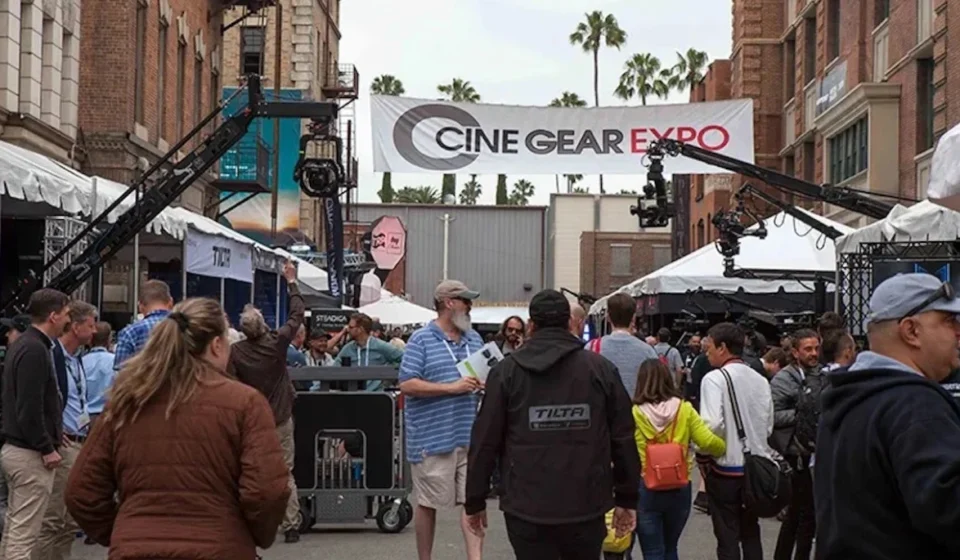

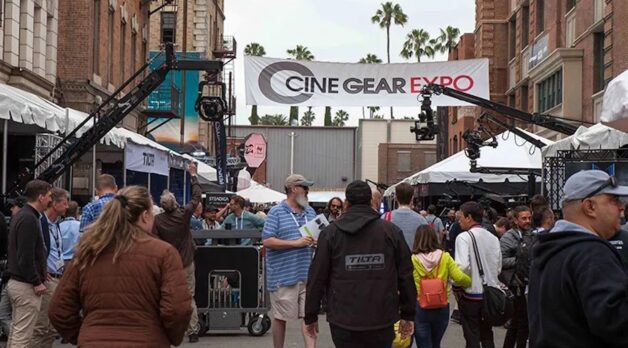
While the massive, industry-wide conventions like the NAB Show in Las Vegas often trigger an existential crisis for the dedicated cinephile—highlighting a landscape where cinema’s cultural footprint feels increasingly dwarfed by the broader, hyper-fast growth of digital content—the Cine Gear Expo offers a different, more grounded perspective. Held annually against the iconic backdrop of the Universal Studios Lot, Cine Gear serves as a two-day sanctuary for the Los Angeles filmmaking community. It is a gathering of cinematographers, gaffers, lighting technicians, and engineers, all converging not just to survey the latest technical specifications, but to reconnect with the craft itself.
The Pulse of the Industry: A Shift in Demographics
This year’s event felt particularly charged. As I made my way through the studio gates, I caught up with Alec Moeller, an independent filmmaker and member of the Filmmaker Magazine "New Faces" class of 2022. Moeller, a self-confessed traditionalist who prefers the simplicity of naturalistic lighting and film stocks, described his attendance as an "ethnographic study."
"As an independent filmmaker who’s mostly disinterested in the latest and greatest lighting, stabilization, and digital cameras, I’m here to observe," Moeller noted. What struck him most, however, was the palpable energy of the younger attendees. He pointed out groups of students and young professionals wearing shirts referencing the recent viral successes of Obsession and Backrooms. "In the wake of those projects, there is a specific, tactile energy in the air," he observed.
The demographic shift was clear. While the Friday crowds leaned heavily toward the film-school-undergrad set—a testament to the city’s deep pool of freelance talent—the atmosphere remained one of shared curiosity. It is this intersection of seasoned industry veterans and the next generation of visual storytellers that gives Cine Gear its unique vitality.
Chronology: From Panels to the Backlot
The layout of the 2026 Expo at the Universal Studios Lot was, at times, a logistical challenge. Unlike the more compact feel of previous years at the Warner Bros. lot, the Universal configuration separated the seminar stages from the vendor tents by a significant distance, requiring attendees to navigate shuttles and direct sunlight to catch buzzy panels.
The experience felt less like a trade show and more like a film festival—specifically, the sprawling, sun-drenched chaos of a Sundance. Attendees navigated the layout with the singular focus of those hunting for the next great tool, often seen lugging the ubiquitous, comically large yellow Insta360 tote bags, which became the unofficial vessel for smaller swag and brochures collected throughout the day.
Day One: The ASC and the Art of the Lens
My second day commenced with the annual American Society of Cinematographers (ASC) panel, a highlight of the expo. With 15 ASC members on stage—including luminaries like Jeff Cronenweth, Rachel Morrison, Karl Walter Lindenlaub, and Natasha Braier—the depth of expertise was staggering.
The session opened with a visual history of the Society’s century-long legacy, featuring a fleeting but breathtaking glimpse of John Toll’s Oscar-nominated work in The Thin Red Line. While the sheer number of panelists meant that no single conversation could dive deeply into technical process, the anecdotes were illuminating. Steven Fierberg spoke eloquently about "body consciousness" on set, urging attendees to consider how their physical positioning dictates the camera’s movement. Meanwhile, Natasha Braier offered a haunting reflection on her craft, noting that her upbringing under a military dictatorship in Argentina—where everything was coded in subtext—continues to influence her ability to tap into the unconscious, emotional layers of a frame.
Technical Evolution: Lighting and the "Canary Yellow" Perspective
Post-panel, I accompanied Local 728 gaffers Drew Moe and Jeffrey Taylor, the minds behind the boutique rental house Canary Yellow, to Stage 17. Their mission was clear: identifying the next additions to their fleet.
"Most of Hollywood’s history has been defined by a slow evolution—tungsten, then HMIs, then fluorescent," Moe explained. "That timeline is extinct. Now, every year, we’re seeing LED units updated with new chipsets and modular attachments. It’s an incredibly exciting, if demanding, time."
Moe highlighted the progress made by companies like Aputure, specifically praising their proprietary Blair CG color engine, a breakthrough that suggests the industry is finally moving toward a standard of color accuracy that was once impossible in the early days of LED adoption. Furthermore, our walkthrough of Blackout Lighting Console’s V3 update showcased a shift toward visual-centric control. By allowing DPs and gaffers to manipulate lighting via an iPad interface that prioritizes fluid, intuitive control over rigid numerical values, Blackout is positioning itself as a vital tool for the modern, fast-paced set.
Innovation in Film: The Cinelux Sixteen
Perhaps the most ambitious project on the floor was the Cinelux Sixteen. Developed by Cinelux Cinema Tools, this 16mm camera represents a rare feat in the current market: the development of a new film camera from scratch.
Chief engineer Caz Voorhees explained that the device is designed to shoot film and digital simultaneously, recording to an SD card at 3.2k resolution with a real-time film-emulation LUT applied. "The digital capture was the easy part," Voorhees admitted. "The magazine—moving the film from one side to the other with zero friction in such a tight space—that is the really difficult part."
The project carries an open-source ethos, with the team aiming to release magazine designs for 3D printing, ensuring that users have true agency over their equipment. With a target release of mid-2027, the Cinelux Sixteen represents a bridge between the nostalgia for celluloid and the pragmatic demands of modern dailies.
The Renaissance of Vintage Glass
The preservation and rehousing of vintage lenses continue to be a dominant trend. At the Zero Optik booth, operations manager Alex Baxter discussed their work restoring Bausch & Lomb Ultra Baltar lenses from the 1930s. "These lenses were relegated to attics for decades because they didn’t work with modern mirror shutters," Baxter said. "Digital cinema gave them a second life."
The trend extends to the ASC itself, which commissioned Zero Optik to restore a set of 1950s Todd-AO 65mm lenses. These iconic pieces of glass, used on classics like The Sound of Music, are now being used by contemporary masters like Greig Fraser to achieve a specific, consistent aesthetic that digital lenses often struggle to replicate.
Similarly, Atlas Lens Co., founded by Dan Kanes, has redefined the anamorphic market. By trading the high field curvature of vintage lenses for a more "parallel" field curvature, Atlas has allowed cinematographers to capture wide, two- or four-person shots without the focus "falling off" the edges of the frame. Their new Kaizen Series, designed for massive sensors like the ARRI Alexa 265, proves that even as sensors grow, the hunger for anamorphic character remains insatiable.
Implications: The Future of the Trade
As I wrapped up the expo at an ASC Clubhouse barbecue—sharing ribs and conversation with industry peers—it became clear why Cine Gear persists in an era of digital saturation.
The industry is currently in a state of rapid flux. Technology is becoming more accessible, yet the barrier to "professional" quality is moving higher. The ability to shoot on 17K sensors or use AI-driven lighting consoles is significant, but it is secondary to the human element. The camaraderie found at Cine Gear, the ability to debate the merits of a specific lens rehousing over a beer, and the shared commitment to the visual language of cinema are what keep the industry moving forward.
Cine Gear 2026 confirmed that while the tools of the trade are becoming faster, smarter, and more complex, the core of the profession remains unchanged: it is about the story, the light, and the people behind the lens. As cinematographer Chapin Hall noted, "It’s the most fun trade show. Sometimes I can’t make it around the corner for two hours because I keep running into friends." In a fragmented digital world, that human connection is the most valuable piece of gear of all.