Aardman’s Ovine Icon Returns: The Technical Mastery and Cultural Resonance of ‘Shaun the Sheep: The Beast of Mossy Bottom’

The cinematic landscape of 2024 has unexpectedly become the "Year of the Sheep." Following the surprising critical success of the documentary The Sheep Detectives earlier this spring, the medium of animation is now welcoming back the undisputed "ovine OG" of the silver screen. Aardman Animations, the Bristol-based powerhouse behind Wallace & Gromit and Chicken Run, has released its third feature-length outing for its most enduring silent protagonist: Shaun the Sheep: The Beast of Mossy Bottom.
Arriving seven years after the intergalactic hijinks of A Shaun the Sheep Movie: Farmageddon, this latest installment serves as both a refreshing entry point for a new generation of viewers and a masterclass in the timeless art of wordless slapstick. As the animation industry increasingly leans toward hyper-realistic CGI and high-octane dialogue, Aardman’s commitment to the tactile, handcrafted world of Mossy Bottom Farm remains a defiant and delightful anomaly.
Main Facts: A New Chapter in the Mossy Bottom Saga
Shaun the Sheep: The Beast of Mossy Bottom marks a significant milestone for the franchise, transitioning the series into a seasonal "spooky-season" niche that has historically been underserved in the realm of high-quality preschool and family entertainment. The film, which runs a lean and efficient 80 minutes, is directed by Aardman veterans Steve Cox and Matthew Walker. While both are first-time feature directors, their deep history with Shaun’s television adventures ensures that the franchise’s DNA remains intact.
The core cast returns in their non-verbal capacities. Justin Fletcher provides the expressive bleats and sighs of Shaun, while John Sparkes pulls double duty as the long-suffering Farmer John and the authoritarian yet well-meaning sheepdog, Bitzer. Joining the ensemble is Nina Sosanya, who voices a formidable new character—a local veterinarian who provides a rare spark of romantic interest for the hapless Farmer.
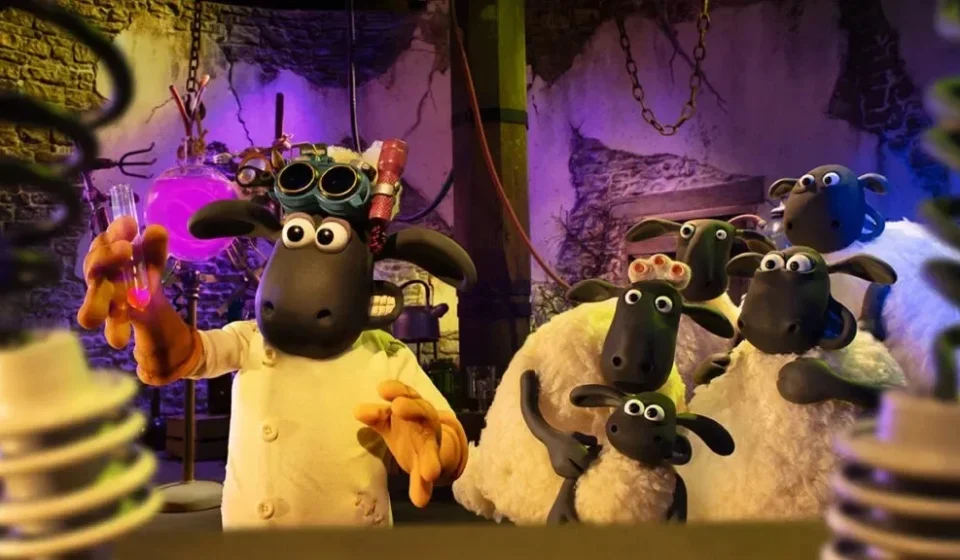
The plot pivots away from the sci-fi tropes of Farmageddon and toward the "mad scientist" subgenre of gothic horror, albeit filtered through the lens of rural British comedy. When a sequence of elaborate pratfalls destroys the flock’s secret pumpkin patch just days before Halloween, Shaun attempts to use "Homemade Science" to fast-track the growth of new gourds. The resulting "Beast" is not a monster from the shadows, but a chemical mishap that transforms Farmer John into a hairy, yeti-like pariah, leading to a series of escalating misunderstandings and visual gags.
Chronology: From ‘A Close Shave’ to Feature-Length Dominance
To understand the weight of The Beast of Mossy Bottom, one must look at the thirty-year evolution of the character. Shaun first appeared as a supporting player in Nick Park’s 1995 Oscar-winning short A Close Shave. His breakout potential was immediate, leading to a television series in 2007 that eventually spanned over 170 episodes and reached audiences in 180 countries.
The transition to the big screen began in 2015 with Shaun the Sheep Movie, which proved that the character’s wordless "visual Esperanto" could sustain a 90-minute narrative. This was followed by 2019’s Farmageddon, which introduced extraterrestrial elements.
The timeline of The Beast of Mossy Bottom is intentionally evergreen. While the technology in the world of the film occasionally hints at the modern era, the setting remains a pastoral time capsule. The film’s development cycle, typical for stop-motion, spanned several years, with directors Cox and Walker meticulously planning the "falling-domino" set pieces that have become the studio’s trademark. The narrative itself takes place over the final week of October, culminating in the "Halloween Hoedown," a narrative choice that reflects the growing influence of American-style holiday celebrations in the United Kingdom.
Supporting Data: The Technical Artistry of Stop-Motion
The brilliance of Aardman’s work lies in the intersection of technical precision and human imperfection. Unlike the polished surfaces of Pixar or Illumination, The Beast of Mossy Bottom retains the "thumbprint" aesthetic—the subtle evidence that these characters are physical puppets being moved 24 times for every second of footage.
The Score and Soundscape
In the absence of dialogue, the film’s narrative weight is carried by Natalie Holt’s score. Holt, known for her work on Loki, brings a "delightfully frantic" energy to the film. The orchestrations transition seamlessly between the cozy atmosphere of a British farm and the heightened, melodramatic tension of a 1930s Universal Horror film. The sound design is equally crucial; every "baah," grunt, and mechanical click is engineered to convey complex emotional states that words might otherwise over-complicate.
Visual Comedy Metrics
Critics have noted the film’s "inordinately high hit rate" regarding its jokes. Aardman’s comedy is built on a "joke-to-joke" basis, often utilizing the entire frame. For example, a single scene involving a "voluptuous sheep" cleaning a blackboard with her fleece serves as a microcosm of the film’s philosophy: it is a simple, perfect sight gag that requires no cultural context to understand, yet is executed with a level of timing that rivals the best of live-action physical comedy.
Official Responses: Critical Reception and Industry Impact
The initial critical response to The Beast of Mossy Bottom has been overwhelmingly positive, with many reviewers highlighting the film’s "cheery consistency." In an era where many animated franchises suffer from "sequel fatigue," Aardman has been praised for maintaining a level of quality that feels both fresh and familiar.
Industry analysts have pointed out that Aardman’s model is uniquely resilient. By avoiding celebrity voice-over reliance and dialogue-heavy scripts, the studio creates products that are infinitely exportable. There is no need for dubbing or localization when the humor is entirely visual.
Furthermore, the film’s "all-ages" appeal has been cited as its greatest strength. While children are drawn to the slapstick energy and the "hairy hijinks" of the transformed Farmer, adult viewers have responded to the sophisticated cinematic references. The film includes nods to Alfred Hitchcock’s Psycho and Michael Jackson’s Thriller music video, rewarding the "elders" in the audience without alienating the primary demographic.
Implications: Social Commentary and Cultural Shifts
Beyond the comedy, The Beast of Mossy Bottom offers a subtle, perhaps unintentional, look at the changing face of British culture. The film’s focus on a "Halloween Hoedown" and trick-or-treat paraphernalia highlights the Americanization of the UK’s autumnal traditions. A decade or two ago, such a theme would have felt foreign in the "innocently English" setting of Mossy Bottom; today, it is part of the cultural fabric.
Satire and Social Acceptance
More poignantly, the film continues the social messaging seen in Farmageddon. While the previous film dealt with the acceptance of outsiders (aliens), The Beast of Mossy Bottom touches on themes of bigotry and mob mentality. When Farmer John is transformed into a "yeti," the village’s reaction—a wave of fear and protest—mirrors real-world tensions regarding "otherness."
The film incorporates stray satirical jabs at parking regulations and, in a more timely and sharp touch, the rise of far-right rhetoric in the UK. While the directors are careful not to let the messaging overshadow the fun, the presence of these themes suggests that Mossy Bottom is not entirely insulated from the complexities of the 21st century.
The Future of Visual Storytelling
The success of Shaun the Sheep: The Beast of Mossy Bottom reaffirms that there is still a massive global appetite for traditional, physical storytelling. In a digital world, the tactile nature of clay and the meticulous choreography of stop-motion offer a "wholesome, giddy" alternative to the sensory overload of modern blockbusters.
As Shaun continues to "wool the roost," Aardman proves that you don’t need a massive script or a cast of A-list stars to tell a compelling story. All you need is a plucky sheep, a bit of "Homemade Science," and an unwavering commitment to the art of the gag. The Beast of Mossy Bottom is not just a seasonal treat; it is a reminder that in the world of cinema, sometimes the best way to speak to everyone is to say nothing at all.