Decoding the Anomalies: A Deep Dive into the Visual Craft of ‘The End of Oak Street’

In the landscape of contemporary cinema, few directors possess the distinct, genre-bending vision of David Robert Mitchell. Following his acclaimed work on It Follows and Under the Silver Lake, Mitchell returns with his most ambitious project to date: The End of Oak Street. Starring Hollywood heavyweights Anne Hathaway and Ewan McGregor, the film is a masterful blend of domestic drama and high-concept science fiction, forcing audiences to confront the fragility of suburban stability when reality itself begins to fray at the edges.
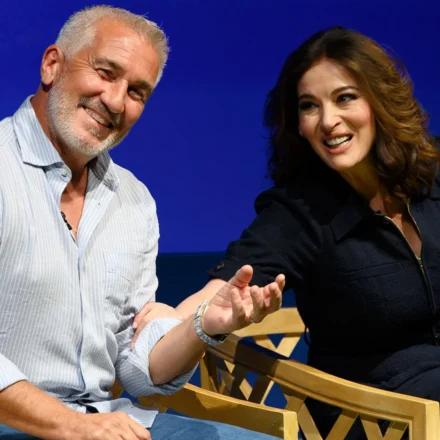
This week, the fxguide editorial team—comprising industry veterans Matt Wallin, Jason Diamond, and Mike Seymour—has convened for episode 309 of The VFX Show to dissect the technical wizardry, narrative choices, and visual philosophy behind this enigmatic production.
The Premise: Suburban Displacement and Temporal Shifts
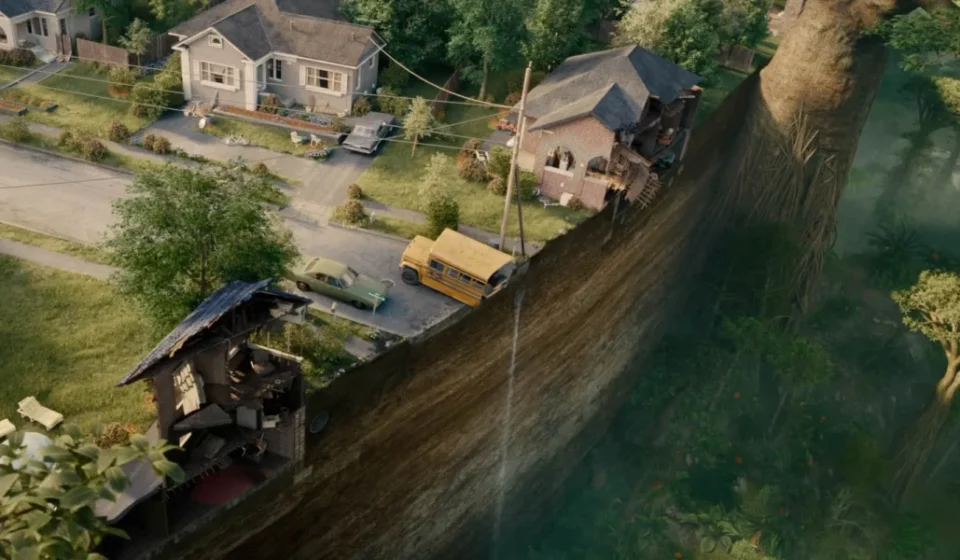
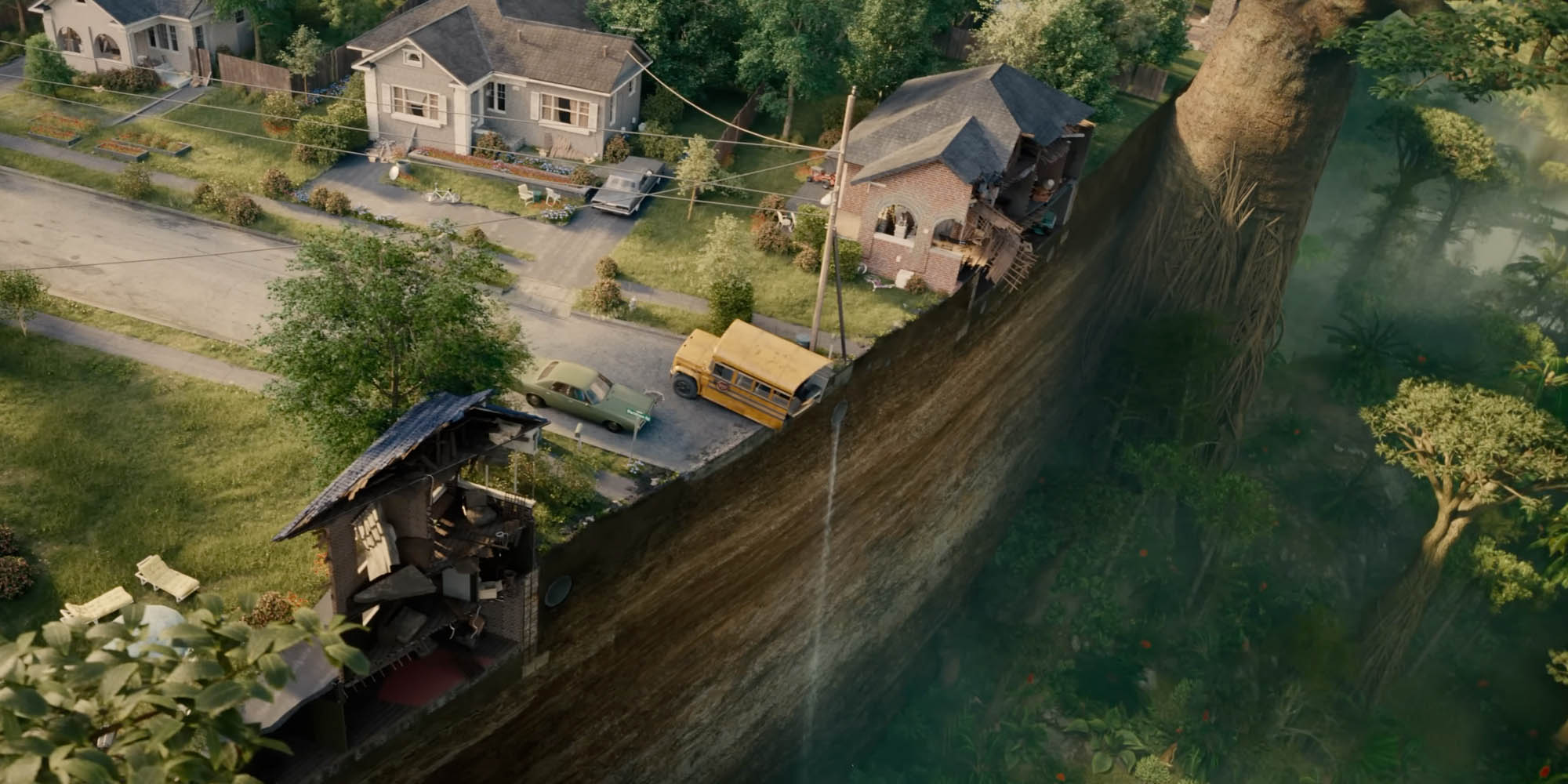
At its core, The End of Oak Street centers on the Platt family, an average household navigating the mundane rhythms of 20th-century suburban life. However, Mitchell’s script quickly introduces a cataclysmic, albeit localized, anomaly. Following a mysterious event, the entire neighborhood is physically and temporally displaced, finding itself cast into an uncharted, surreal landscape.
The narrative tension is built not merely on the threat of the unknown, but on the psychological erosion of the Platt family as they struggle to maintain their suburban normalcy in an environment that refuses to adhere to the laws of physics or chronology. Hathaway and McGregor anchor the film with performances that prioritize raw, human reactions to impossible stimuli, grounding the film’s increasingly abstract visual language.
Technical Chronology: Bringing the Unknown to Life
The production of The End of Oak Street was a feat of logistical and digital engineering. Understanding the film’s visual impact requires a look at the stages of its creation.
Pre-Production and Design Philosophy
Before a single frame was captured, Mitchell and his production design team established a "lived-in" aesthetic for the Platt residence. The goal was to ensure that when the neighborhood is transported, the contrast between the familiar architecture and the alien surroundings would feel visceral. The team opted for a mixture of practical sets and massive-scale matte paintings, ensuring that the physical environment felt tangible even as the world around it became increasingly fluid.
Principal Photography
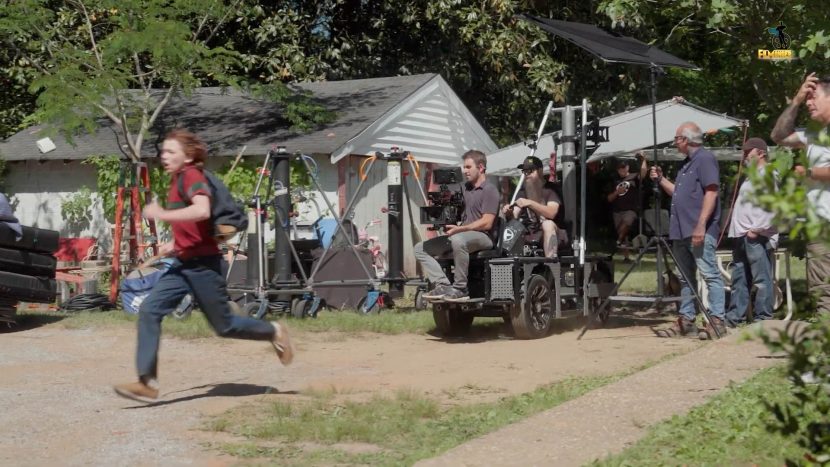
Filmed over a rigorous five-month schedule, the production utilized state-of-the-art virtual production techniques. By employing high-resolution LED volumes, the actors were able to interact with the environment in real-time, allowing for natural light interaction and more authentic performances compared to traditional green-screen workflows.
Post-Production and VFX Integration
The post-production phase focused heavily on "seamless distortion"—a technique designed to depict the temporal shifts without resorting to jarring, conventional sci-fi tropes. The visual effects team had to balance the hyper-realistic textures of 1950s suburbia with the ethereal, often glitch-like properties of the new dimension. This required a meticulous frame-by-frame approach, ensuring that the "glitches" in reality felt like an organic part of the film’s visual fabric.
Supporting Data: The Craft Under the Microscope
In episode 309 of The VFX Show, the hosts delve into the specific filmmaking choices that define the viewing experience. The discussion covers:
- The Lighting Palette: The transition from the warm, nostalgic tones of the opening act to the desaturated, high-contrast light of the "unknown" space.
- Camera Movements: Mitchell’s signature use of long, tracking shots that trap the audience within the claustrophobia of the Platt family home, contrasted with the disorienting, static shots used during the temporal displacement.
- Practical vs. Digital: A breakdown of how much of the "Oak Street" set was built in reality versus generated in post-production. The consensus among the panel is that the film’s reliance on practical textures prevents it from feeling like a sterile digital experiment.
Official Responses and Creative Vision
Director David Robert Mitchell has maintained a relatively guarded stance regarding the film’s ambiguous ending, preferring that the audience interpret the "why" of the displacement through their own emotional lenses. However, in recent press briefings, he noted that the story was born out of a desire to explore "how quickly the structures of our lives can dissolve when the ground beneath us literally shifts."
Anne Hathaway and Ewan McGregor have both lauded the production’s commitment to immersion. McGregor, in particular, noted during a promotional interview that the virtual production sets allowed him to "find the character’s panic" more effectively than traditional methods, as he wasn’t constantly scanning for digital markers.
Implications: The Future of Sci-Fi Realism
The release of The End of Oak Street signals a potential shift in how big-budget genre films approach visual effects. By prioritizing the emotional weight of the scene over the "spectacle" of the VFX, Mitchell has set a high bar for independent and studio-backed filmmakers alike.
The "Mitchell Method"
The success of this film lies in its restraint. Rather than utilizing VFX to create explosions or massive cityscapes, the team used digital tools to create atmosphere. This has profound implications for the industry:
- Budget Allocation: Demonstrates that investment in high-quality texture and lighting design pays off more than raw particle count.
- Performance-First VFX: Validates the use of virtual production not just for cost-saving, but as an essential tool for actor engagement.
- Genre Evolution: Proves that science fiction can be as much about the domestic interior as it is about the galactic exterior.
The Debate: Does It Work?
As with any project of this scope, The VFX Show panel is split on the film’s efficacy.
The Case for Success:
Mike Seymour argues that the film’s "glitch" aesthetic is the most sophisticated use of visual distortion in the last decade. He highlights the opening sequence—a six-minute unbroken take—as a masterclass in blocking and digital integration.
The Case for Critique:
Matt Wallin expresses reservations regarding the pacing of the second act. He questions whether the "mysterious event" is adequately explained, noting that while the visuals are stunning, the narrative momentum occasionally suffers in favor of aesthetic indulgence.
The Middle Ground:
Jason Diamond suggests that the ambiguity is the film’s greatest strength, allowing the audience to project their own fears onto the Platt family’s struggle. He argues that the technical choices are entirely in service of this ambiguity, making the film a rewarding experience for repeat viewings.
Conclusion: Join the Conversation
The End of Oak Street is not merely a film to be watched; it is a film to be studied. Its technical achievements represent a convergence of traditional cinematography and modern computational power that will undoubtedly influence the next generation of visual storytellers.
We invite our readers to listen to the full analysis on episode 309 of The VFX Show. Whether you are a fan of David Robert Mitchell’s unique brand of dread or simply interested in the nuts and bolts of how these visual illusions are conjured, this episode offers an essential deep dive.
Engage with the community:
- Listen: Access the full podcast on Apple Podcasts, Spotify, or via our RSS feed.
- Watch: Visit our official fxguide YouTube channel for a visual breakdown of the scenes discussed.
- Discuss: Have a theory on the ending? A critique of the VFX? Send your thoughts to the team at the provided contact address.
The Platt family may be lost in time, but the conversation regarding their journey has only just begun. Join the panel as they continue to put the filmmaking choices under the microscope, and decide for yourself: what happens when the street ends, and the unknown begins?
Special thanks to Jim Shen for his tireless work on the editing and production of this episode. For more information on the participants, visit their respective websites:
- Matt Wallin: mattwallin.com | Mastodon: @mattwallin
- Jason Diamond: thediamondbros.com
- Mike Seymour: fxguide.com