A Legacy Captured: The Intimate Genesis and Maternal Gaze of ‘Making Marie Antoinette’

In the annals of 21st-century cinema, few films have undergone a reputational transformation as dramatic as Sofia Coppola’s 2006 biopic, Marie Antoinette. Initially met with a mixture of boos and bewilderment at the Cannes Film Festival for its candy-colored palette and post-punk soundtrack, the film has since ascended to the status of a cult masterpiece—a definitive exploration of youthful isolation, the gilded cage of celebrity, and the feminine experience. However, while the world saw the decadent, anachronistic finished product, a more intimate story was being captured behind the scenes.
Twenty years after the film’s initial production, the release of the archival documentary Making Marie Antoinette provides an unprecedented look at the creation of this modern classic. More than a standard "behind-the-scenes" featurette, the documentary serves as a poignant, posthumous bridge between the late Eleanor Coppola and her daughter Sofia. It is a cinematic heirloom that explores not only the technical rigor of a massive period production at Versailles but also the complex emotional landscape of a mother watching her daughter claim her place in a legendary filmmaking dynasty.
Main Facts: A Posthumous Masterpiece of Archival Footage
Making Marie Antoinette is a documentary directed by the late Eleanor Coppola, who passed away in April 2024. The project was born from nearly 80 hours of raw footage Eleanor captured during the 2005 production of Sofia Coppola’s third feature film. While Eleanor had long been a documentarian of her family’s creative processes—most notably with the 1991 Emmy-winning Hearts of Darkness: A Filmmaker’s Apocalypse—this project remained in the archives for nearly two decades.
The documentary was revived during the early days of the COVID-19 lockdown, when Eleanor and Sofia began sifting through the tapes together. Following Eleanor’s death, Sofia Coppola took the mantle to complete the project, sharing editing credits with Aaron Matthews. The final film is a compact, emotionally resonant narrative that uses Diane Lane to voice Eleanor’s private diary entries, providing a lyrical, introspective commentary on the footage.
The documentary covers several key aspects of the 2006 production:
- The unprecedented access granted to the production by the Palace of Versailles.
- The meticulous craft of four-time Academy Award-winning costume designer Milena Canonero.
- The "Coppola family style" of filmmaking, featuring contributions from Francis Ford Coppola and Roman Coppola.
- The internal reflections of lead actress Kirsten Dunst as she navigated her own transition from child star to adult lead.
Chronology: From the Halls of Versailles to the Lockdown Edit
The timeline of Making Marie Antoinette spans nearly two decades, tracing the evolution of the Coppola family’s artistic journey.
2005–2006: The Production Phase
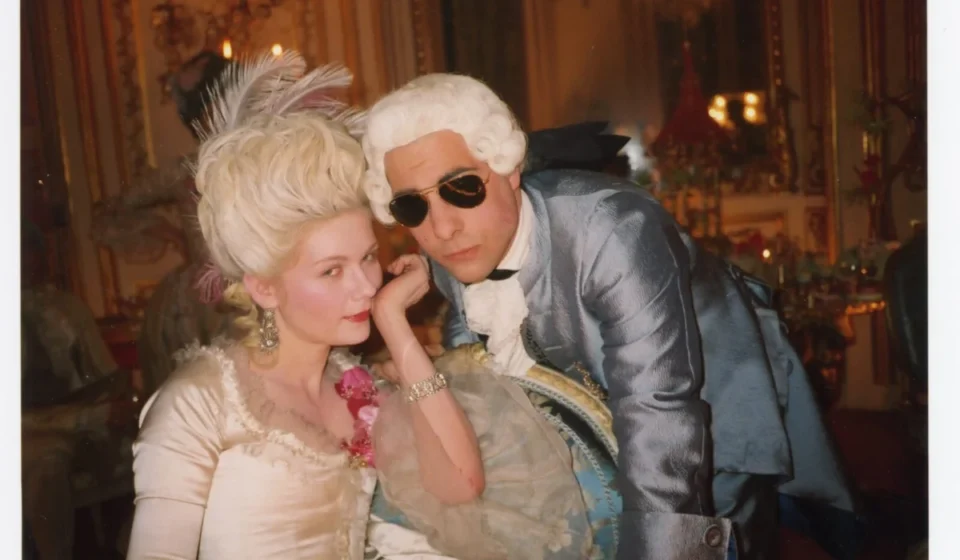
During the filming of Marie Antoinette, Sofia Coppola was operating under immense pressure. Following the massive critical and commercial success of Lost in Translation (2003), she was granted a significant budget and the rare privilege of filming inside the actual rooms where the ill-fated Queen of France once lived. Eleanor Coppola was present on set every day, quietly operating a handheld camera. Her goal was to document the "bubble" of the production, capturing the contrast between the rigid etiquette of the 18th-century court being portrayed and the relaxed, hip atmosphere of Sofia’s set.
2020–2022: The Lockdown Revival
The project sat largely untouched until the global pandemic forced a period of stillness. During the lockdown, Eleanor and Sofia began a collaborative review of the 80 hours of footage. This period served as a creative bonding experience, allowing the two women to reflect on their shared history. It was during this time that the structure of the documentary began to take shape, moving away from a traditional "making-of" and toward a dual-narrative about filmmaking and motherhood.
2024: Completion and Legacy
Eleanor Coppola passed away in early 2024 at the age of 87. In the wake of her mother’s death, Sofia Coppola moved to finalize the edit. The film serves as one of Eleanor’s final creative statements, released at a time when Marie Antoinette is celebrating its 20th anniversary and Sofia Coppola herself has solidified her status as one of the most influential directors of her generation.
Supporting Data: The Craft Behind the Opulence
The documentary provides a treasure trove of technical data and artistic insights that explain how Marie Antoinette achieved its distinct visual identity. Eleanor’s camera lingers on the departments that are often overlooked in mainstream press, highlighting the sheer scale of the production.
The Wardrobe of a Queen
One of the most significant revelations in the documentary is the exhaustive work of Milena Canonero. The film confirms that Canonero and her team created 72 unique gowns for Kirsten Dunst alone. The documentary captures the "daily washing and powdering of countless wigs," a Herculean task required to maintain the pristine, pastel aesthetic Sofia demanded. The footage shows the transition from historical accuracy to the "New Wave" sensibility Sofia envisioned, where 18th-century silhouettes were paired with a color palette inspired by a box of Ladurée macarons.
The Culinary Art of the Set
Eleanor’s footage also documents the work of the set decorators and food stylists. In a departure from typical prop usage, much of the decadent food seen on screen—the towering cakes, the towers of oysters, and the intricate jellies—was actually edible. The documentary shows the "jiggly gelatin" and the labor-intensive process of pairing food colors with the specific silk fabrics of the costumes, ensuring a cohesive "total work of art" (Gesamtkunstwerk) feel.
The Scale of Versailles
Filming in Versailles presented unique challenges. The documentary captures the logistical nightmare of moving modern film equipment through narrow, centuries-old corridors and the strict rules imposed by the French authorities to protect the historical site. It reveals a production that was simultaneously massive in scale yet intimate in its leadership.
Official Responses and Personal Reflections
The emotional core of the documentary lies in the vocal performances and the candid interviews captured on set.
Eleanor Coppola’s Internal Monologue
The use of Diane Lane to read Eleanor’s diary entries provides a window into the mind of a woman who spent much of her life in the shadow of giants. Lane’s delivery is described as "tender" and "maternal," reflecting Eleanor’s self-introspection. In one entry, Eleanor muses: "Sofia’s generation is different… My husband and daughter are directors. And I became the audience."
These entries reveal a subtle, bittersweet tension. Eleanor admits to setting aside her own creative interests while raising three children, wondering why she didn’t pursue more of her own endeavors earlier. This provides a stark contrast to Sofia, who Eleanor notes is directing with "clarity, grace, and her own hip approach to history," managing both a high-stakes career and a personal life.
Kirsten Dunst’s Perspective
A 24-year-old Kirsten Dunst is seen in the footage reflecting on her own life. She draws parallels between herself and Marie Antoinette, noting the burden of being a young woman in the public eye. "I see why Sofia relates to the story, too," Dunst says, acknowledging the shared experience of being judged by a world that views young women as decorative objects rather than complex individuals.
The Family Support System
The documentary also features cameos from the wider Coppola clan. Roman Coppola is shown directing the second unit, acting as a stabilizing force for his sister. Francis Ford Coppola, the patriarch, is seen offering sage, albeit grand, advice: "Throw a Marie Antoinette party and invite everyone to it. Do it the way you want to do." This reinforces the idea that while Sofia was the auteur, she was supported by a family "ecosystem" that understood the pressures of the craft.
Implications: A Shift in the Cinematic Lens
The release of Making Marie Antoinette carries significant implications for film history and the study of the "female gaze."
Redefining the "Making-of" Genre
Most behind-the-scenes documentaries are promotional tools designed to sell a DVD or a streaming service. Making Marie Antoinette breaks this mold by functioning as a "creative artifact." It prioritizes the emotional truth of the set over the technical logistics. It shifts the focus from "how did they do that shot?" to "how did it feel to be there?"
The Evolution of the Coppola Legacy
The documentary marks a transition in the Coppola family narrative. For decades, the story was dominated by Francis Ford Coppola’s masculine, often chaotic productions (as seen in Hearts of Darkness). Making Marie Antoinette presents a different model of filmmaking—one that is collaborative, aesthetically driven, and deeply rooted in female perspective. It highlights a generational shift where the "director’s wife" (Eleanor) eventually finds her own voice, and the "director’s daughter" (Sofia) becomes the leader of the pack.
A Historical Record of the "Aughts"
Finally, the film serves as a near-term historical record of a specific moment in Hollywood. It captures the mid-2000s indie-auteur boom, a time when filmmakers like Sofia Coppola were blending high-art sensibilities with pop-culture aesthetics. By bottling these "fleeting moments in time," Eleanor and Sofia Coppola have created a document that is as much about the passage of time as it is about the making of a movie.
In conclusion, Making Marie Antoinette is a rare gift to cinephiles. It is a film about the labor of beauty, the complexity of history, and, ultimately, the enduring bond between a mother and a daughter. As Eleanor’s diary concludes, her daughter claimed her spot in a "largely male-dominated industry" not by mimicking those who came before her, but by trusting her own distinct, "hip" vision. This documentary ensures that the process of that reclamation is never forgotten.