Beyond the Grasp of Reason: Inside the Nightmarish World of The Restoration at Grayson Manor

In the annals of cinematic horror, the "killer limb" subgenre has long occupied a peculiar space. From the campy, slasher-adjacent antics of Idle Hands to the psychological dread of Oliver Stone’s The Hand, the concept of a sentient appendage acting against its host’s will has traditionally been played for either laughs or straightforward, B-movie shocks. However, the upcoming genre-bender The Restoration at Grayson Manor—the latest project from Chroma—promises to dismantle those tropes entirely, replacing them with a searing, gothic exploration of trauma, lineage, and the subconscious.
With a debut at Fantastic Fest 2025 that left audiences reeling, the film has quickly become one of the most anticipated horror releases of the year. Combining high-concept body horror with a sharp, queer-coded melodrama, the film is poised to redefine the limits of the genre when it hits theaters this October.
The Premise: A Legacy of Violence
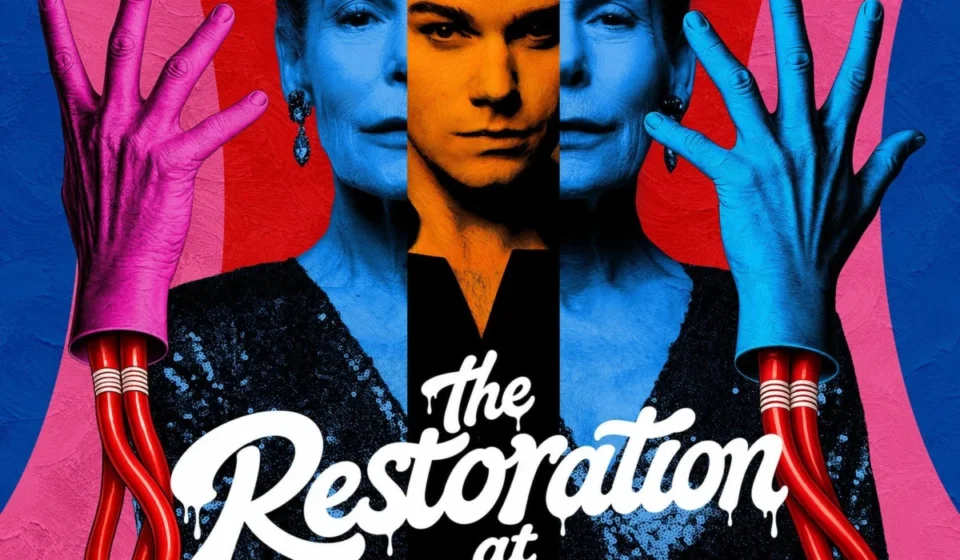
At its core, The Restoration at Grayson Manor is a story of a mother’s toxic obsession and a son’s unraveling reality. The film follows Boyd Grayson, played with jarring vulnerability by Glee alum Chris Colfer. Boyd is a hedonistic heir trapped within the walls of a decaying, ancestral Gothic estate—a character defined by his excess and his strained relationship with his mother, portrayed by the legendary Alice Krige.
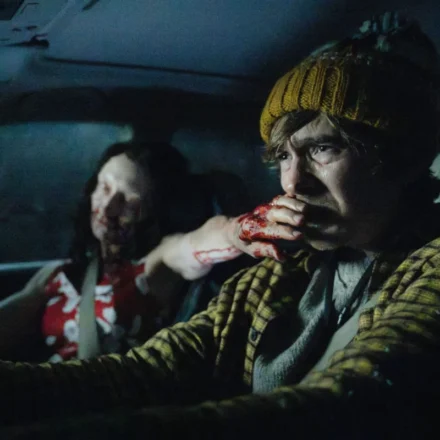
The narrative pivot occurs when a catastrophic accident leaves Boyd handless. In a desperate, chilling act of maternal "devotion," his mother opts to rebuild him using state-of-the-art prosthetics. These are no ordinary medical devices; they are experimental, wired directly into Boyd’s subconscious. As the film progresses, it becomes clear that these synthetic hands are not merely tools of restoration. Instead, they serve as conduits for Boyd’s most suppressed, violent urges. The hands act on impulses he doesn’t even know he possesses, turning the Grayson estate into a claustrophobic stage for a symphony of visceral horrors.
The Creative Engine: McQuaid and Chapman
The film’s distinct tone is the result of a formidable creative partnership. Director Glenn McQuaid, best known for the cult-favorite I Sell the Dead, brings a seasoned eye for macabre aesthetics and dark humor. McQuaid has long been a champion of practical effects and gothic atmosphere, and Grayson Manor appears to be his most ambitious undertaking to date.
He is joined by screenwriter Clay McLeod Chapman, an author whose work (including the acclaimed Ghost Eaters) is defined by its ability to weave supernatural dread into the fabric of everyday grief. Together, the duo has crafted a screenplay that balances the absurdity of the "sentient hand" premise with a deeply human, if twisted, family dynamic. Early reports suggest that the script treats the horror not just as a series of jump scares, but as an externalization of the protagonist’s internal psychological decay.

The Cast: A Masterclass in Genre Performance
While the prosthetic limbs may be the star of the show in terms of spectacle, the performances anchor the film in reality. Chris Colfer, moving away from his musical-comedy roots, delivers a performance that critics have described as a career-defining turn. His portrayal of Boyd Grayson requires a physical acting style that conveys helplessness, rage, and a slow-motion descent into madness.
Opposite him is Alice Krige, an actress who has commanded the screen in genre classics like Sleepwalkers and Star Trek: First Contact. Krige has a rare gift for playing characters who are simultaneously maternal and monstrous, and her role as the matriarch of Grayson Manor is already being hailed as a standout. For fans of 1990s horror, her presence is a major draw, invoking the same terrifying, regal intensity she brought to her most iconic roles.
The supporting ensemble further fleshes out the claustrophobic world of the estate. Featuring Daniel Adegboyega, Declan Reynolds, Gabriela Garcia Vargas, Matthew McMahon, Issac Cairns, and Dave Byrne, the cast provides a robust layer of tension as the people unfortunate enough to be caught in the orbit of the Grayson family’s crumbling empire.
Chronology of the Production
The development of The Restoration at Grayson Manor has been a carefully guarded secret, marked by a deliberate marketing strategy designed to build mystery.
- Pre-Production (2024): Chroma greenlit the project, focusing on practical set design and the development of the prosthetic effects that would define the titular "restoration."
- Production (Early 2025): Principal photography took place in isolated, atmospheric locations, allowing the cast to lean into the isolation of their characters.
- Fantastic Fest Premiere (September 2025): The film made its public debut at Fantastic Fest, where it received immediate praise for its tonal duality. Reviewer Matthew Jackson labeled it "A haunting, hilarious queer melodrama," setting the stage for its wider release.
- Trailer Launch (September 2025): The official trailer was released, showcasing the film’s blend of high-fashion aesthetics and gruesome, kinetic violence, officially signaling a shift in marketing toward a general audience.
- Theatrical Release (October 2025): The film is scheduled to arrive in cinemas just in time for the Halloween season, positioning it as a sophisticated alternative to traditional slasher fare.
Supporting Data and Critical Reception
Critical consensus following the Fantastic Fest premiere suggests that The Restoration at Grayson Manor succeeds where similar films have faltered. By leaning into the "queer melodrama" aspect of the narrative, the film avoids the pitfalls of being just another "killer hand" flick.
Data from early screenings suggests that the film’s pacing—which begins as a slow-burn family drama before erupting into chaotic, limb-driven violence—is a key point of satisfaction for audiences. Furthermore, the reliance on practical effects over heavy CGI has been cited as a major strength, grounding the horror in a tangible, tactile reality that resonates with modern horror aficionados who value craftsmanship.

Implications: A New Era for Gothic Horror?
The release of The Restoration at Grayson Manor carries significant implications for the horror genre. In recent years, there has been a resurgence of "elevated horror" that prioritizes thematic depth and character study. However, many of these films often lose the "fun" of the genre. Grayson Manor seems to be attempting to bridge this gap, offering a film that is intellectually stimulating yet undeniably, thrillingly violent.
If the film performs well, it could trigger a trend of "body-horror melodramas," where the physical transformation of the protagonist serves as a metaphor for societal or domestic struggles. Moreover, the success of a film centered on such a bizarre premise proves that there is still a massive appetite for original IP that refuses to fit neatly into a single box.
Final Reflections
As the release date approaches, the excitement surrounding The Restoration at Grayson Manor continues to mount. Between the pedigree of its cast, the inventive direction of Glenn McQuaid, and a script that promises to turn the stomach as much as it challenges the mind, it is clear that this is a film designed to leave a mark.
In an age where horror is often predictable, The Restoration at Grayson Manor stands out as a daring, unhinged experiment. Whether it will be remembered as a cult classic or a genre-defining masterpiece remains to be seen, but one thing is certain: audiences who step into the Grayson estate this October should be prepared for something that will, quite literally, get under their skin.
For those who crave cinema that is as beautiful as it is brutal, the wait is nearly over. The hands are ready, the estate is waiting, and the restoration is about to begin.