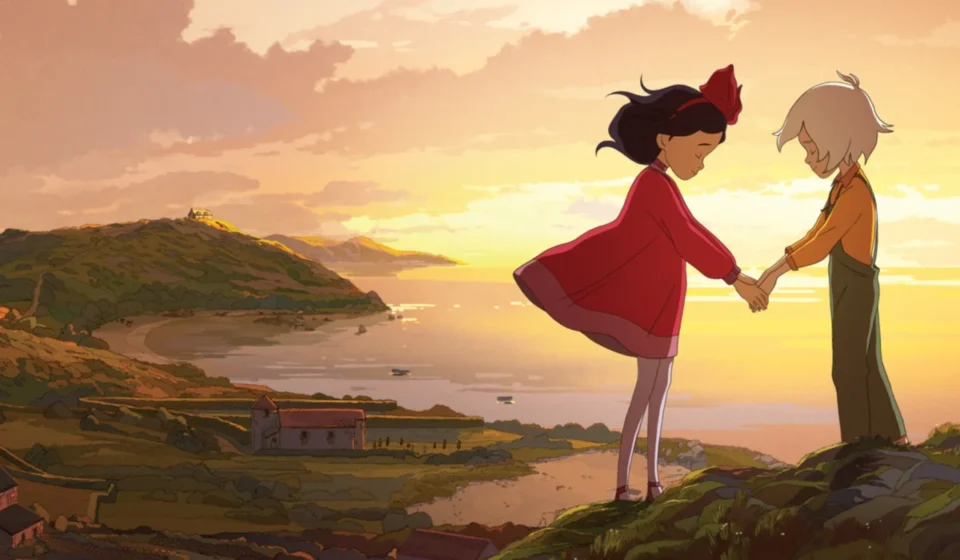

The cinematic lineage of Michael Morpurgo’s literature is one defined by a distinct, "old-fashioned" literary sturdiness. From the grand, sweeping emotionality of Steven Spielberg’s War Horse to the BAFTA-winning success of the recent Kensuke’s Kingdom, Morpurgo’s stories have long served as a fertile ground for filmmakers seeking to bridge the gap between sophisticated historical drama and accessible family entertainment. The latest entry into this prestigious canon is Lucy Lost, an animated feature directed by French visionary Olivier Clert.
Adapted from Morpurgo’s 2014 novel Listen to the Moon, Lucy Lost is a haunting, atmospheric exploration of trauma, isolation, and the far-reaching shadows of the First World War. Having debuted to critical acclaim at a special screening in Cannes and subsequently securing a coveted competition slot at the Annecy International Animation Film Festival, the film signals the arrival of Clert as a major directorial talent in the European animation landscape.
Main Facts: A New Vision for a Classic Tale
Lucy Lost represents a significant departure from traditional children’s animation, opting instead for a narrative complexity that mirrors the "sophisticated construction" of modern prestige cinema. Set in 1915, the film transports audiences to the Isles of Scilly, an archipelago off the Cornish coast of England. While the Great War ravages the European mainland, the islands remain a pocket of deceptive tranquility—until the arrival of a mysterious, traumatized young girl named Lucy.
The film is a French-language production, yet it possesses a "cosmopolitan sensibility" that transcends linguistic barriers. Directed by Olivier Clert—whose previous credits include serving as a creative consultant on Netflix’s Academy Award-nominated Klaus and a storyboard artist on Little Amélie—the film blends high-concept storytelling with a visual aesthetic that pays homage to the legends of the medium.
Key production details include:
- Director: Olivier Clert (Feature debut)
- Screenplay: Helen Blakeman and Olivier Clert, based on Listen to the Moon by Michael Morpurgo.
- Lead Voice Cast: Charlie Rosenzweig (Lucy/Milly), Zach Valentin-Dattas (Alfie), Jessica Monceau (Mary), and Quentin Faure (Jim).
- Original Score: Anne-Sophie Versnaeyen.
- Production Style: 2D-inspired digital animation with a focus on painterly backgrounds and Ghibli-esque character designs.
Chronology: From the Scilly Isles to the Silver Screen
The journey of Lucy Lost began with Michael Morpurgo’s fascination with the real-life maritime history of the Isles of Scilly and the tragic sinking of the RMS Lusitania. Published in 2014, Listen to the Moon was instantly hailed for its dual-narrative structure and its unflinching look at the psychological toll of war on children.
Development and Adaptation
When Olivier Clert and screenwriter Helen Blakeman began the adaptation process, they faced the challenge of translating Morpurgo’s sprawling, epistolary-influenced text into a 90-minute visual narrative. The decision was made to take significant "structural liberties." Unlike the book, which unfolds with a more traditional literary progression, the film utilizes a timeline that "splits, flips, and is realigned." This non-linear approach serves to mirror the fragmented memory of the protagonist, Lucy, whose trauma has rendered her nearly catatonic and physically altered—her hair having turned white from the shock of her experiences.
Festival Recognition
The film’s rollout followed a high-prestige trajectory:
- Cannes Premiere: The film was selected for a special screening at the Cannes Film Festival, a rare honor for an animated family feature, signaling its artistic merit.
- Annecy Competition: Shortly after, it entered the main competition at Annecy, the world’s premier animation festival. This placement solidified its status as a frontrunner in the European animation market.
- Global Distribution Interest: Following these screenings, the film has become a hot commodity for international distributors, with discussions ongoing regarding multilingual dubbing for English-speaking territories.
Supporting Data: Artistic Influences and Technical Execution
What distinguishes Lucy Lost from its contemporaries is its meticulous attention to visual and auditory detail. The film does not merely tell a story; it evokes a specific time and place through a sophisticated artistic lens.
The Visual Palette
Clert’s background as a storyboard artist and consultant is evident in every frame. The film’s aesthetic is a unique hybrid of two distinct influences:
- The English Romantic Tradition: The landscapes of the Scilly Isles are rendered with a lighting style reminiscent of 19th-century English Romantic painters like J.M.W. Turner and John Constable. There is a focus on the "mineral-slate palette" of the Atlantic sky and the lush, wind-swept greenery of the islands.
- Studio Ghibli Influence: Critics have noted a strong resemblance to the works of Studio Ghibli, particularly When Marnie Was There. This is seen in the character designs—simple line creations with wide, expressive eyes and spindly bodies—and in the film’s willingness to let scenes breathe through "gentle pacing."
The Auditory Landscape
The emotional weight of the film is carried significantly by Anne-Sophie Versnaeyen’s score. The music evolves in tandem with the narrative, beginning as a "sparse, lilting string" arrangement that captures the isolation of the islands. As the story expands to include the historical tragedy of the Lusitania, the score swells into a "full orchestral sweep," bridging the gap between a small-scale village parable and a grand historical epic.
Historical Context: The Lusitania
A pivotal element of the film is the sinking of the RMS Lusitania by a German U-boat in May 1915. This event, which killed nearly 1,200 people, serves as the catalyst for the film’s climax. By weaving this historical tragedy into the personal story of Lucy, Clert elevates the film from a simple mystery to a profound meditation on the global consequences of human conflict.
Official Responses and Critical Reception
The reception of Lucy Lost within the industry has been overwhelmingly positive, particularly regarding Clert’s debut as a director.
Critical Consensus
Reviewers have praised the film for its "emotional involvement" and its "clever adaptation" of the source material. While some have noted that the complex timeline might leave very young children "a little adrift," the consensus is that the film respects the intelligence of its audience. The portrayal of social prejudice—specifically how the islanders view Lucy as a "witch" or a German spy—has been cited as a timely exploration of xenophobia and "othering."
Industry Perspective
English-language backers and distributors have expressed high interest, though there is a lingering debate regarding the voice cast for an English dub. While some industry insiders advocate for "star voice casting" to ensure box office success in the US and UK, critics and the creative team have argued for honoring the "rich regional specificities" of the Cornish setting. The authenticity of the Isles of Scilly is central to the film’s identity, and there is a push to ensure that any English version retains that localized flavor.
Implications: The Future of Literary Animation
The success of Lucy Lost carries several implications for the future of the animation industry and the adaptation of children’s literature.
1. The Rise of "Sophisticated" Family Cinema
Lucy Lost proves that there is a global appetite for animated films that do not rely on frantic pacing or pop-culture references. By leaning into a "comfortingly old-fashioned stripe" while utilizing modern narrative techniques, Clert has carved out a space for animation that appeals to both children and cinephiles. This may encourage more studios to take risks on non-linear storytelling in the family genre.
2. French Animation as a Global Powerhouse
Following the success of Klaus and I Lost My Body, Lucy Lost further cements France’s position as a leader in innovative, high-quality animation. The "cosmopolitan sensibility" Clert brings to the project suggests a future where European animation is increasingly seen as a direct competitor to major Hollywood studios, not just in terms of artistry, but in global marketability.
3. The Morpurgo Effect
The continued success of Morpurgo adaptations suggests that his bibliography remains one of the most valuable IPs in British literature. Lucy Lost demonstrates that these stories can be successfully reimagined through different cultural lenses—in this case, a French directorial perspective—without losing the "sturdy, literate" quality that makes them timeless.
4. A Template for Historical Education
By integrating the sinking of the Lusitania and the atmosphere of 1915 England into a compelling character study, Lucy Lost serves as a template for how animation can be used to teach history. It moves beyond dry facts, instead using the medium to explore the emotional and psychological reality of historical events, making them resonant for a new generation.
In conclusion, Lucy Lost is more than a mere adaptation; it is a meticulously crafted piece of art that honors its literary roots while pushing the boundaries of what family animation can achieve. Through the lens of Olivier Clert, the Isles of Scilly become a stage for a universal story of survival, imagination, and the enduring power of the human spirit in the face of war. As the film moves toward a wider global release, it stands as a testament to the idea that some of the most profound stories are found in the quietest, most isolated corners of the world.